
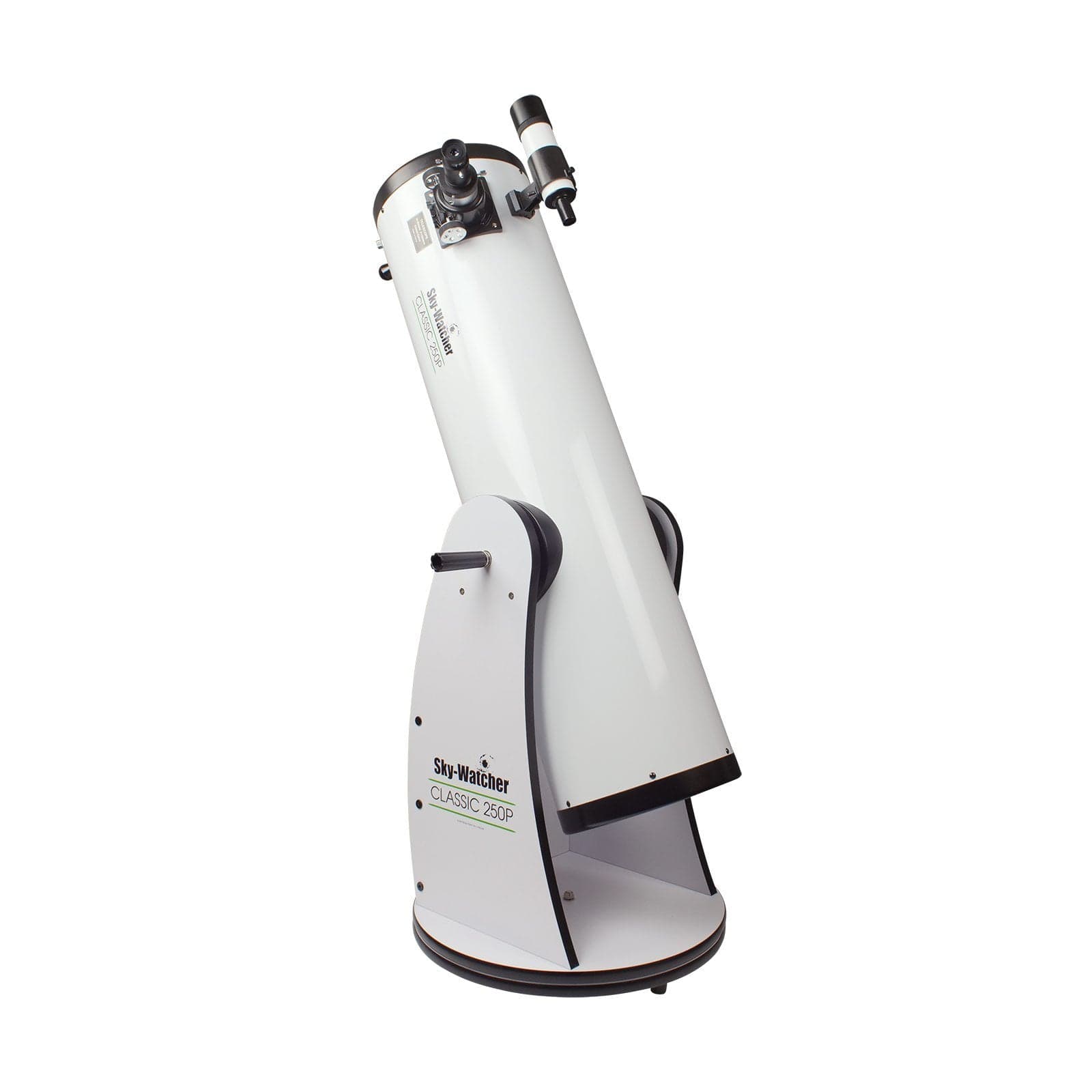
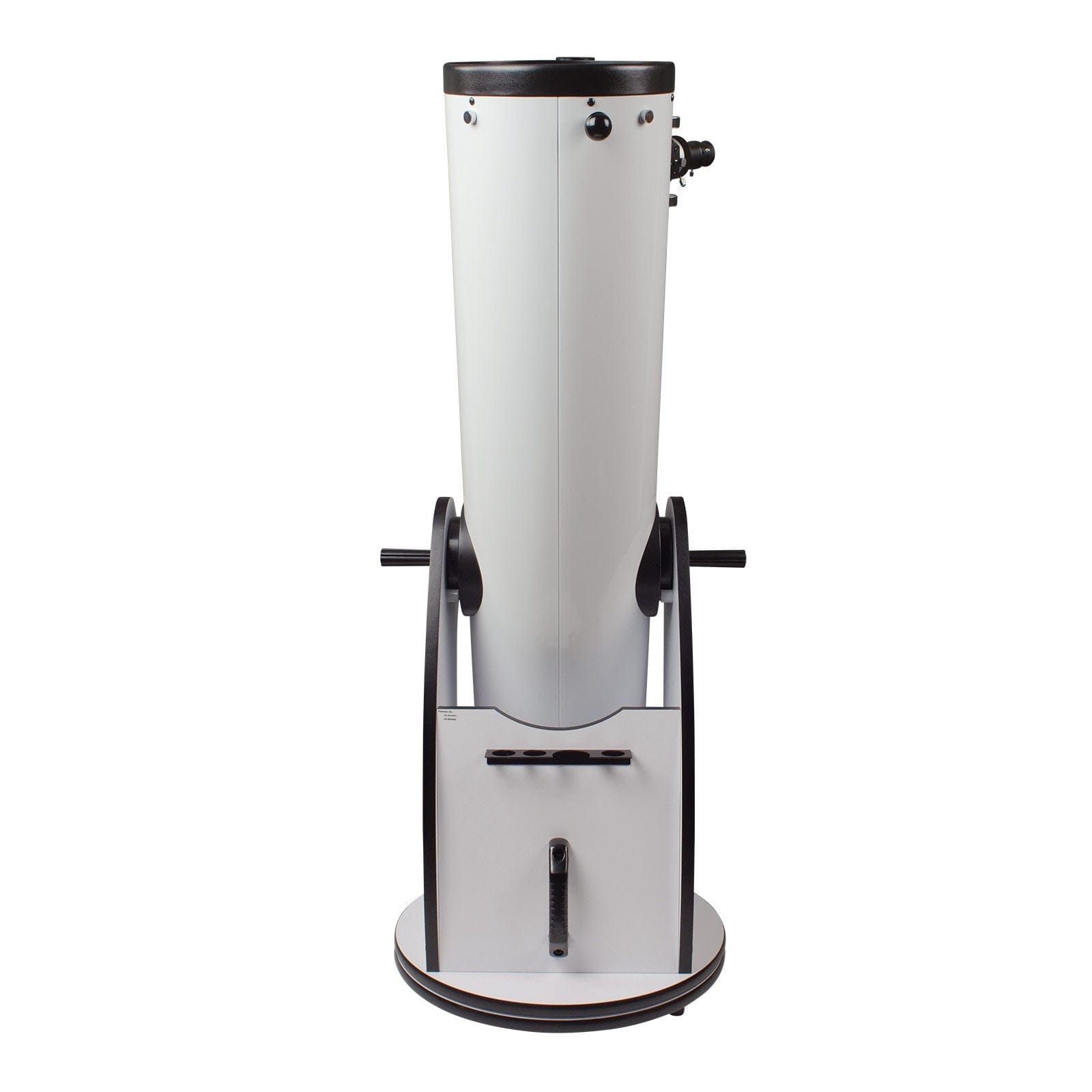
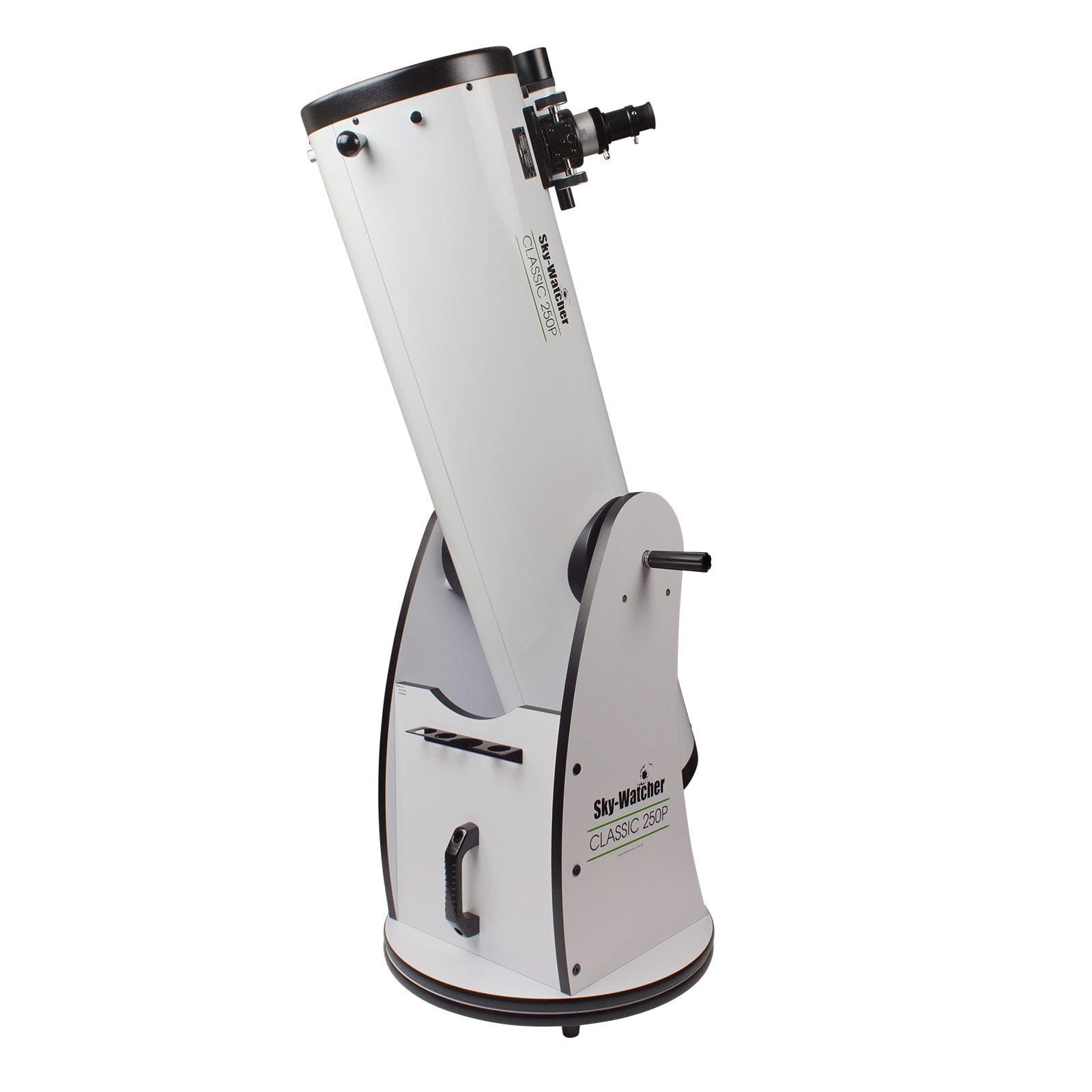
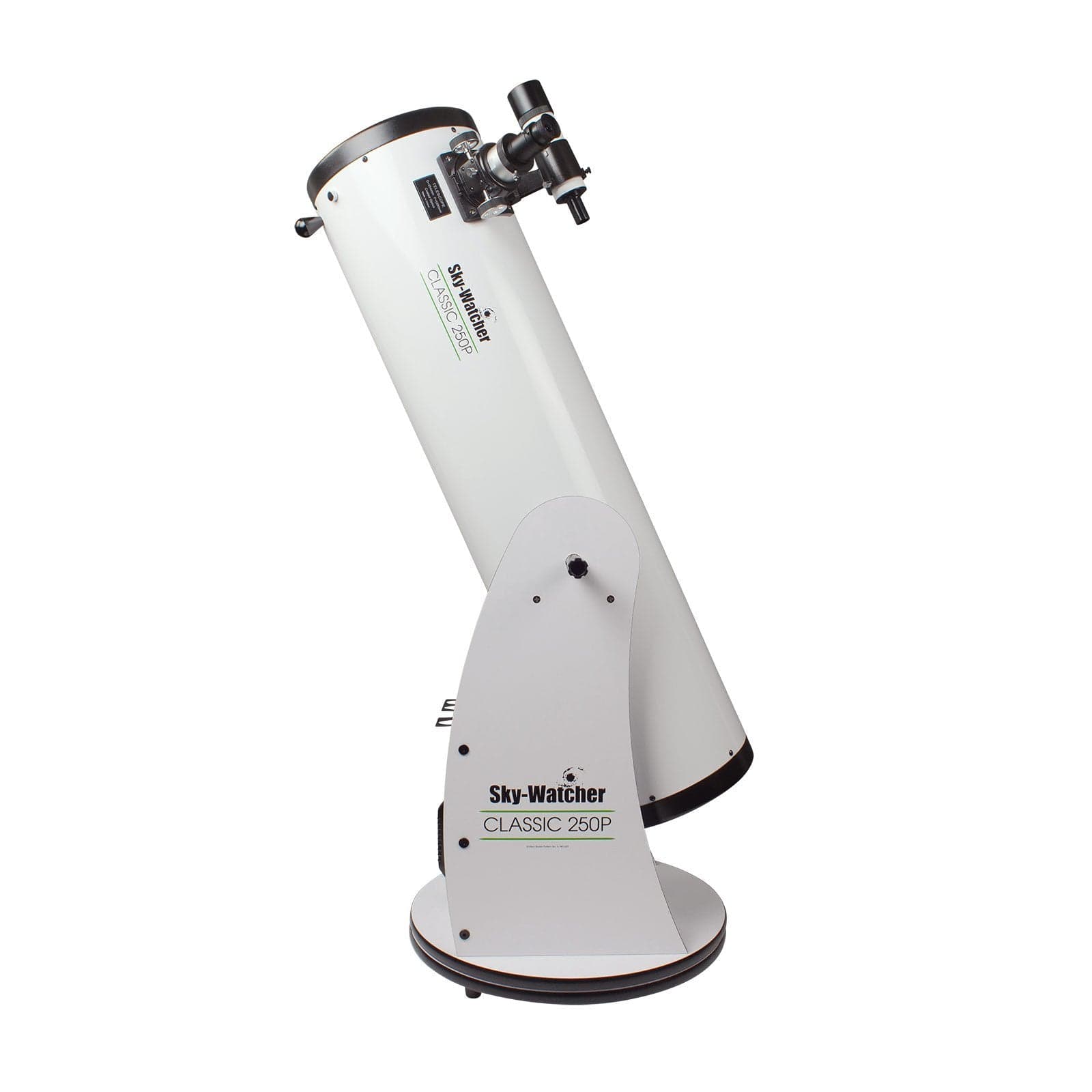
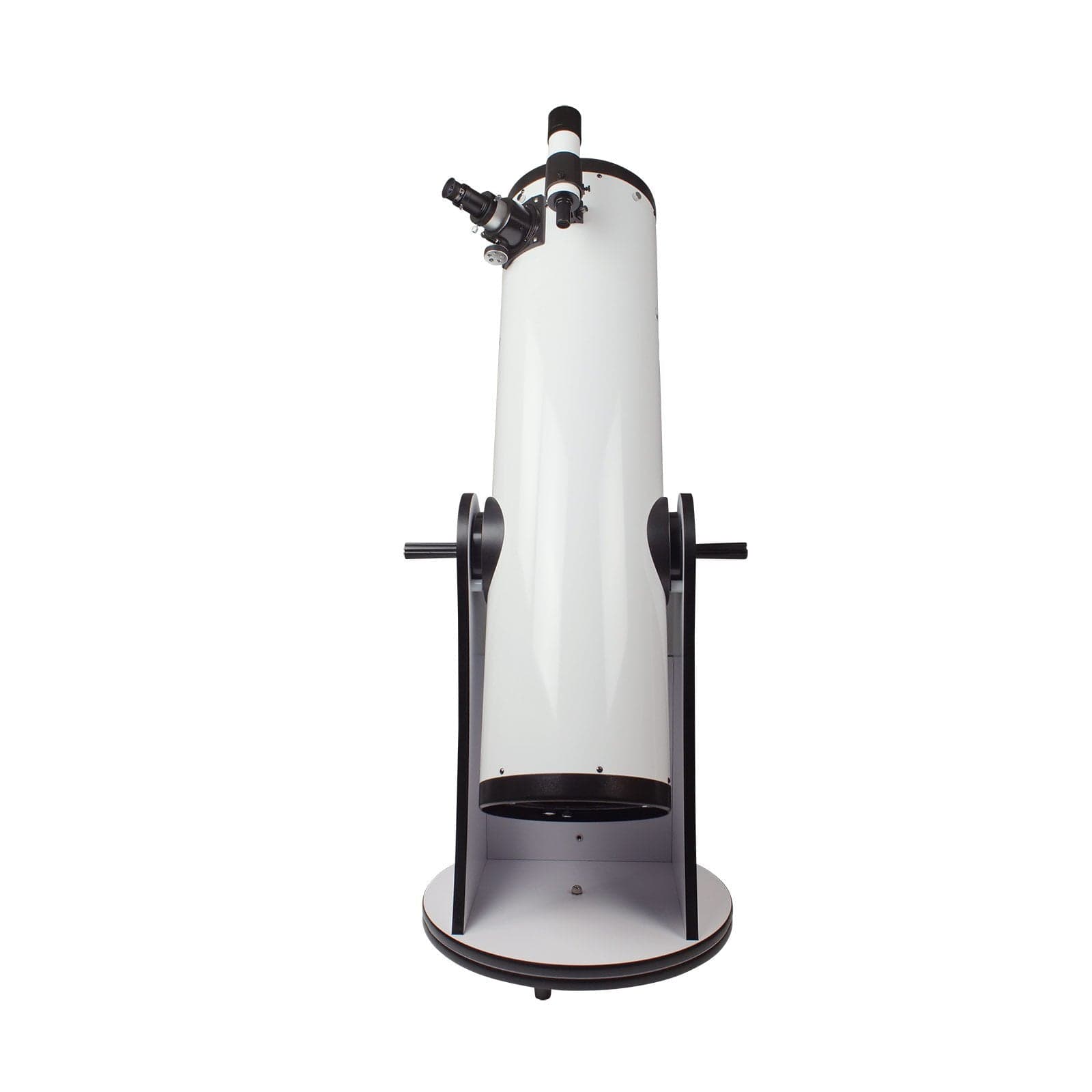
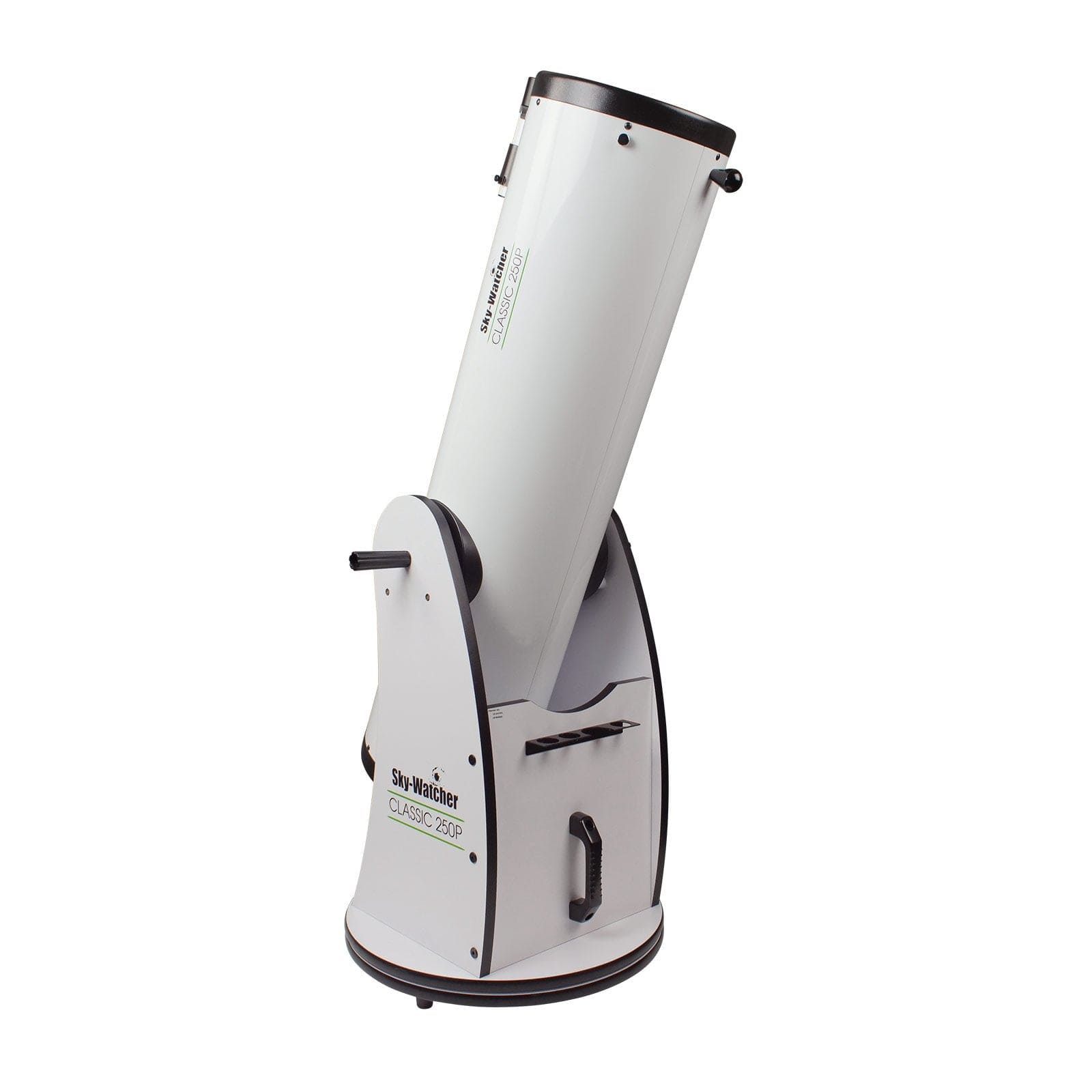
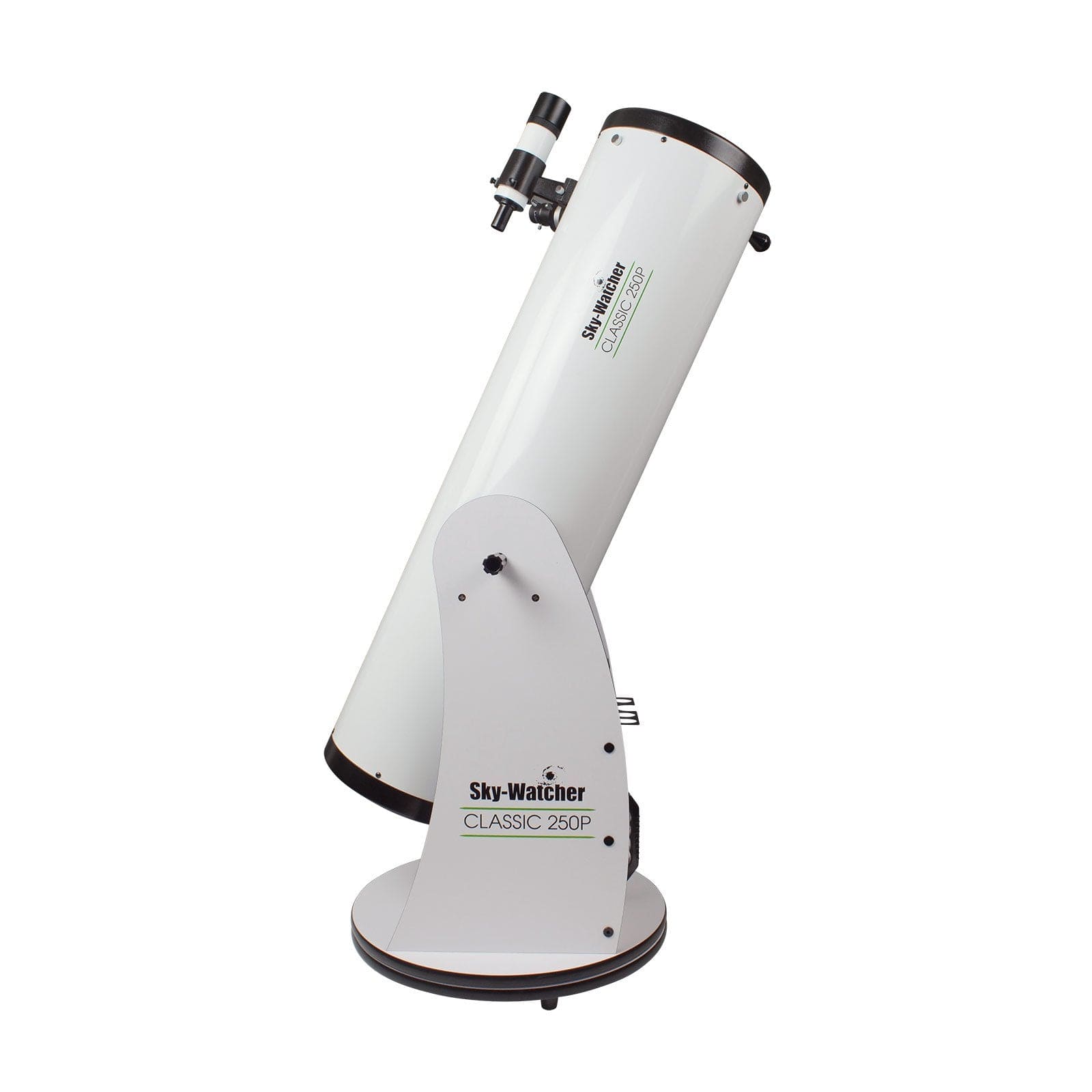
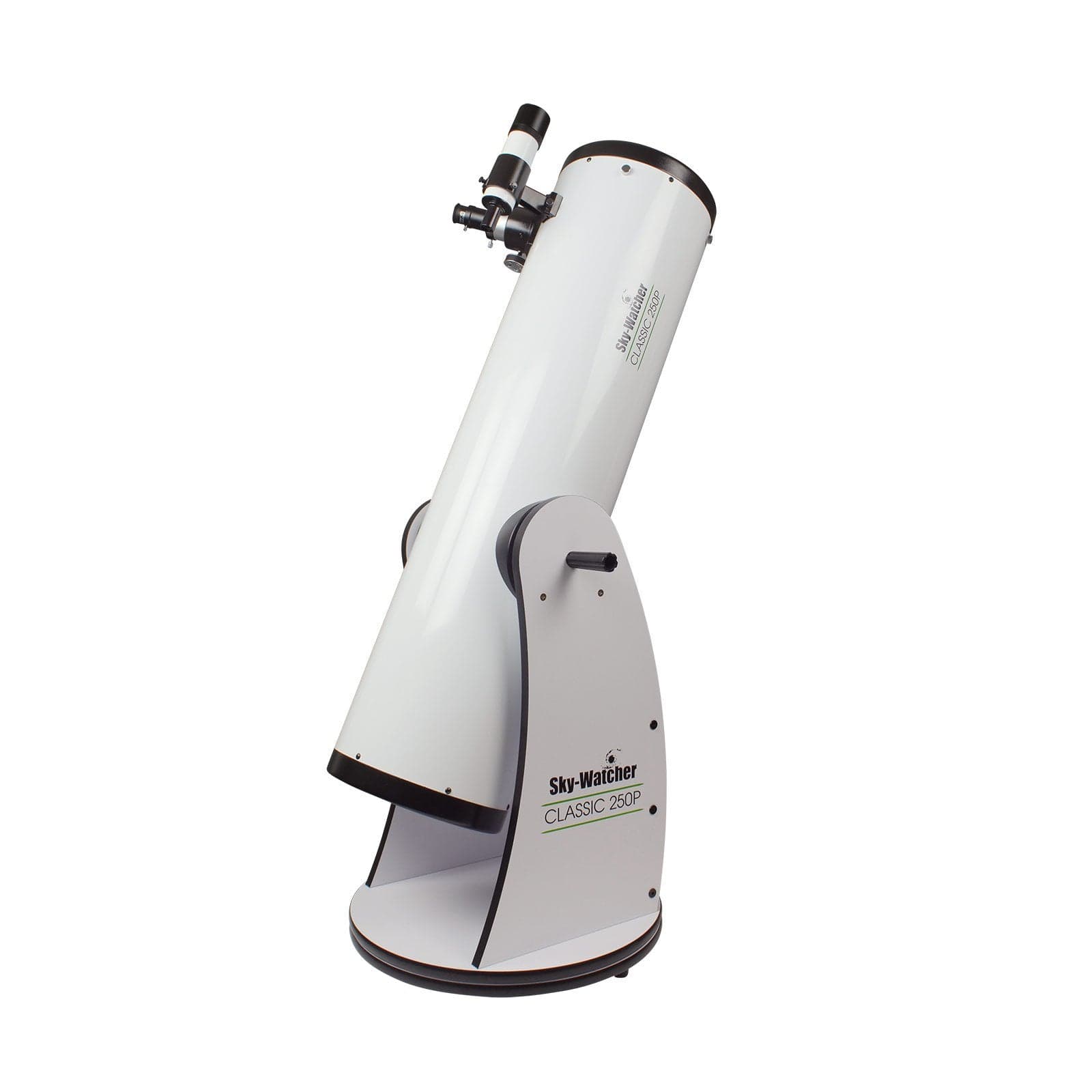


Description
- Affordable, large 250mm aperture delivers stunning viewing experience
- 56% brighter than the Classic 200P Dobsonian
- Patented tension control handle allows for precise slewing and maximum stability
- Parabolic primary mirror with Radiant™ Aluminum Quartz (RAQ™)
- Heavy-duty rocker box with Teflon™ bearings
- 2-inch Crayford-style focuser with 1.25-inch adapter allows for use of nearly any eyepiece
Featuring large apertures and easy functionality, Sky-Watcher’s Classic Dobsonian is the ideal beginner scope. Often referred to as ‘light buckets’, Dobsonians provide users with the highest possible aperture for their money when compared to telescopes of a similar size, such as Schmidt-Cassegrains or refractors. Developed in the 1970s, the Dobsonian-style telescope is an inexpensive solution for bright, detailed visual observing using a simple design. The name ‘Dobsonian’ comes from the telescope’s inventor, John Dobson, a Vedanta monk who popularized sidewalk astronomy and dedicated his life to astronomy outreach. Dobson was notorious for constructing large aperture reflecting telescopes capable of deep sky viewing, using low cost materials. These were often made with found materials, heavy cardboard tubes, recycled porthole glass, and plywood mounts. Dobson, who literally wrote the book on how and why to make amateur telescopes, encouraged other astronomers to assemble their own telescopes and taught workshops on telescope making.
The Classic Dobsonian uses a parabolic primary mirror design, constructed of borosilicate, then polished and coated with our proprietary Radiant™ Aluminum Quartz (RAQ™), producing a remarkable 94% reflectivity. With a 10-inch aperture, the Classic 250P Dobsonian is 1235 times brighter than the human eye! This simple yet effective design is perfect for visual observation of faint objects, such as nebulae, star clusters, and galaxies.
Supporting the Classic Dobsonian is more than just a simple rocker box. The base uses Teflon™ bearings for smooth, easy azimuth slewing and a patented tension control handle to lock the telescope in place. Once locked on an object, the telescope can support both 1.25-inch accessories as well as the heavier 2-inch eyepieces, allowing you to use virtually any eyepiece on the market. The Classic Dobsonian includes two 1.25-inch eyepieces, a 1.25-inch adapter, a 2-inch eyepiece adapter, dust caps and a 9x50 finderscope.
At Sky-Watcher, we stay true to the traditional John Dobson design, using just two mirrors, a metal tube, and a simple rocker box. Although we love computerized telescopes, using a star chart to find objects by hand can be far more fulfilling and will improve your knowledge of the night sky. Unplug your electronic devices, step outside, and become immersed in the wonders of the universe.
| SKU | S11620 |
| UPC | 050234116206 |
| Optical Info | |
|---|---|
| Optical Design | Newtonian |
| Mirror Coatings | Radiant Aluminum Quartz (RAQ)™ coatings with 94% reflectivity |
| Glass Type | Borosilicate |
| Primary Aperture (mm) | 254 |
| F/Ratio | 4.7 |
| Focal Length (mm) | 1200 |
| Secondary Diameter | 64mm |
| Secondary Obstruction (by diameter) | 25% |
| Secondary Obstruction by Area | 6% |
| Observational Info | |
| Dawes Limit | 0.46 |
| Rayleigh Limit | 0.55 |
| Limiting Mag. | 14.5 |
| Minimum Magnification | 36 |
| Maximum Magnification | 500 |
| Light Gathering (compared to next size down) | 57% |
| General Info | |
| Focuser | 2" Crayford |
| OTA Length (Retract/Ext.) | 45" |
| OTA Outer Diameter | 11.375" |
| OTA Weight (with accessories) | 28 |
| Dob Base Weight | 25 |
| Dob Base Measurements | 29"x20.5" |
| Zenith Eyepiece Height | 48" |
| Accessories | |
| Included Finder | 9x50 Finder |
| Included Diagonal | No |
| Included Eyepieces | 20mm/12.5mm |
| Magnification w/ Included Eyepieces | 60x/96x |
| Included Case | No |
| Corrector | No |
Additional Resources
What can I see with this telescope?
Viewing location and sky conditions can vary and will affect actual results.