


Description
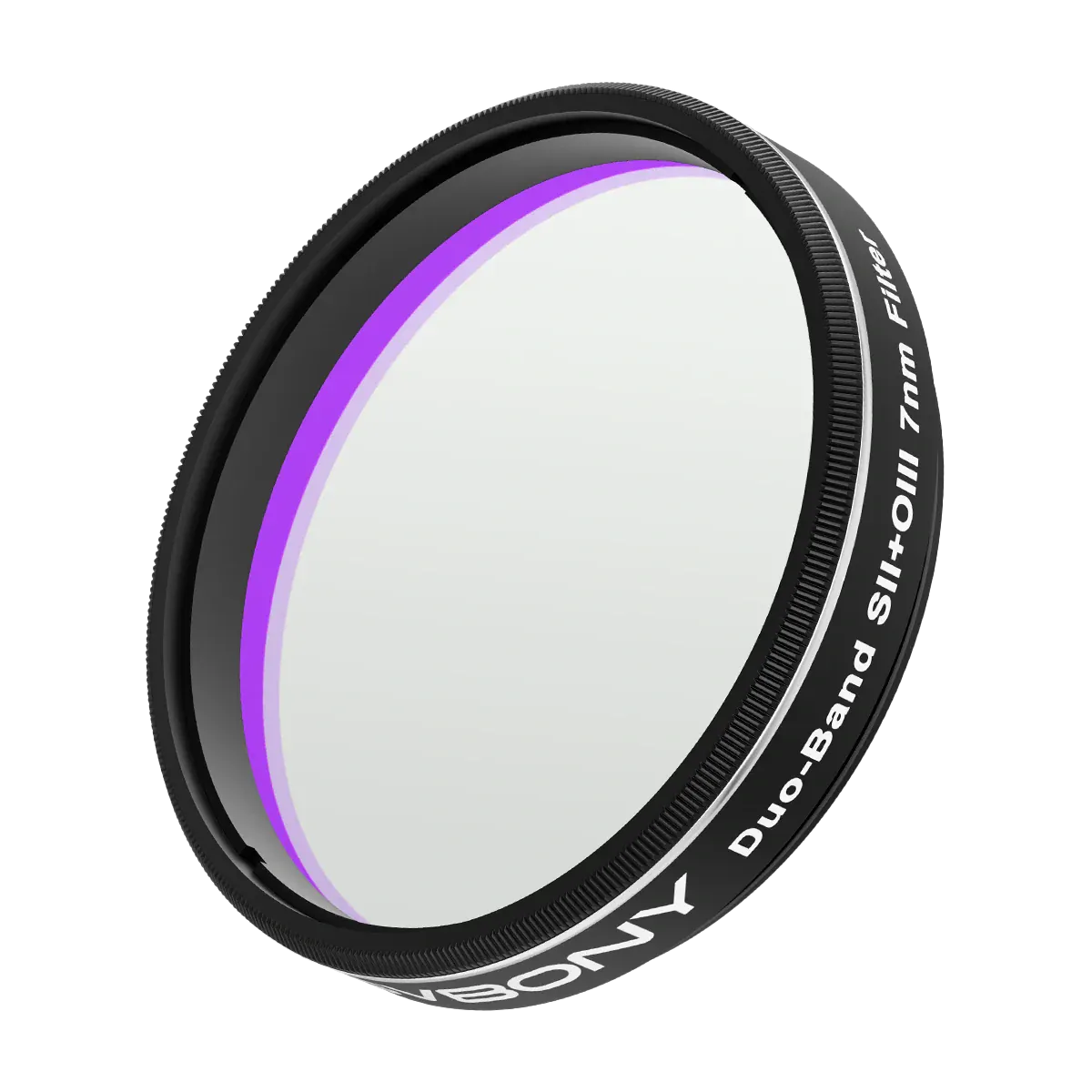
SVBONY SV220 SII & OIII 7nm Duo-Band Narrowband Filter (1.25" & 2")
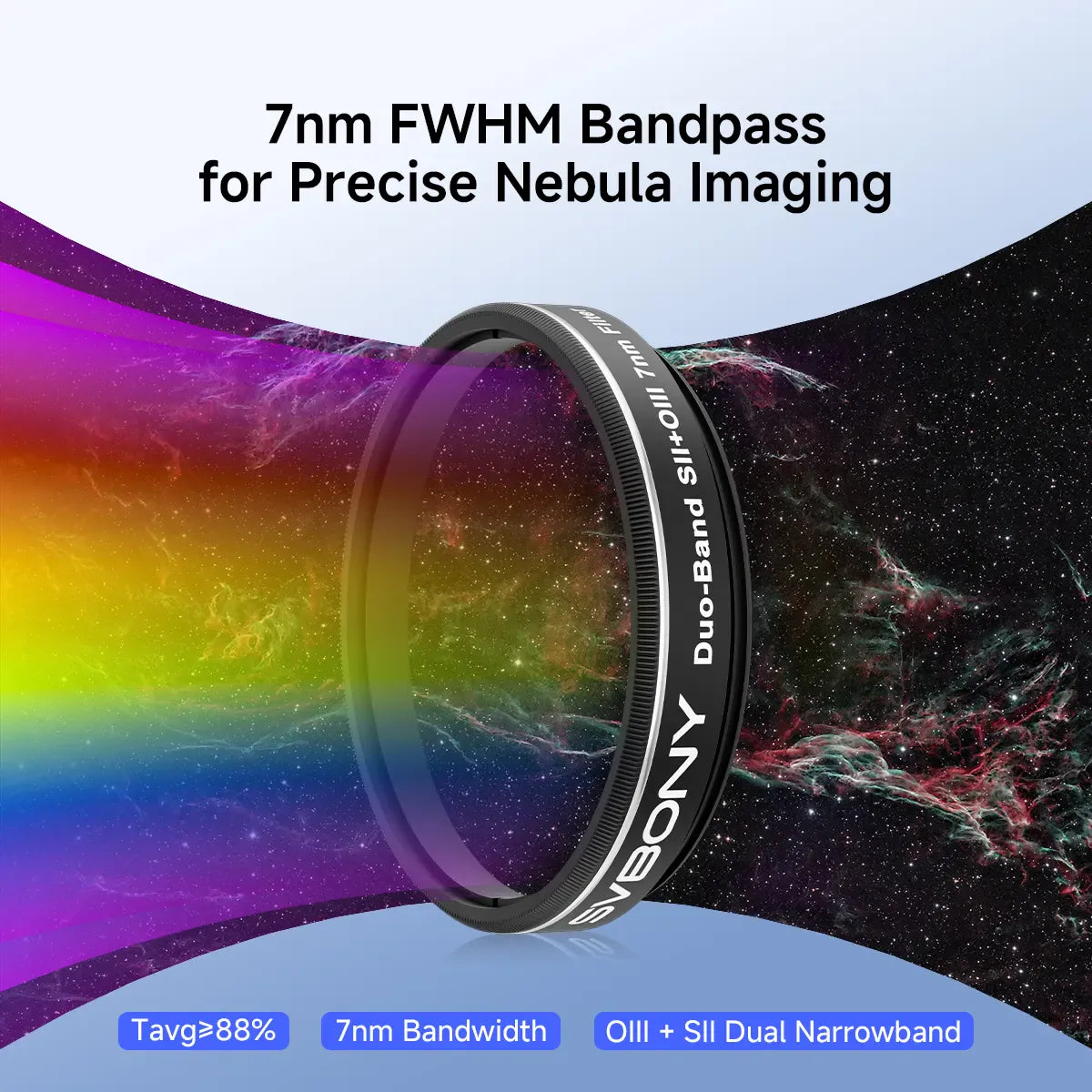
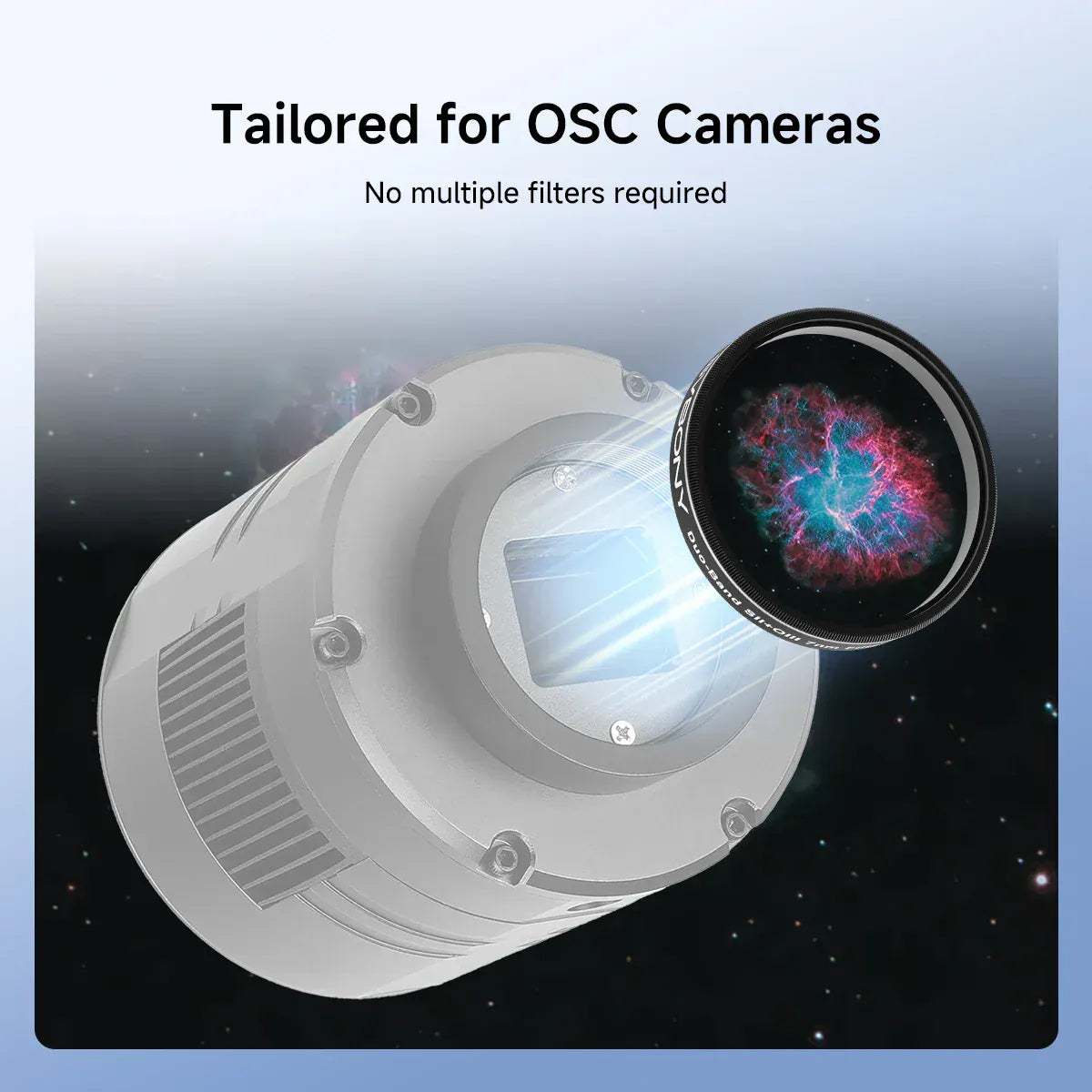
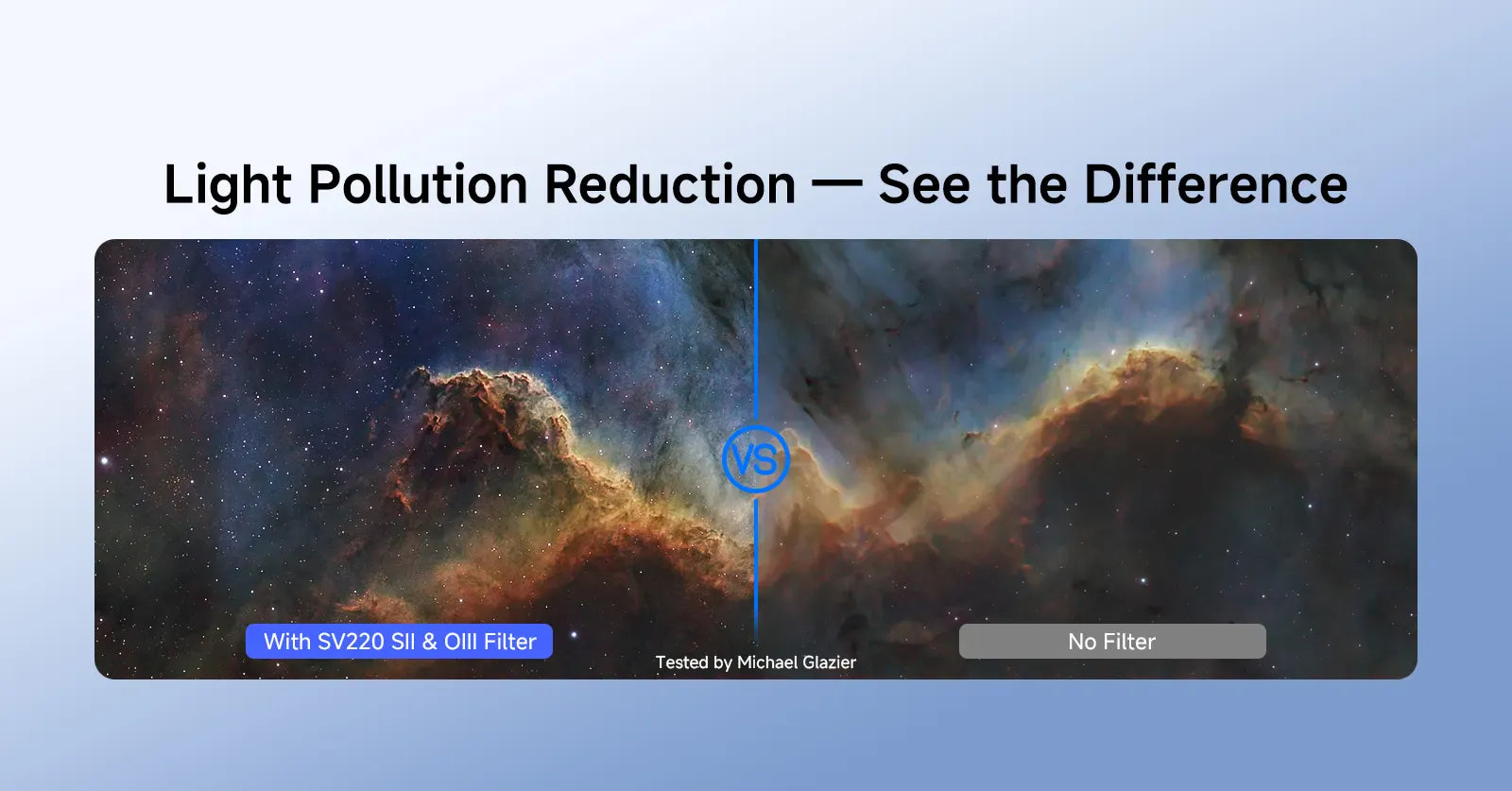
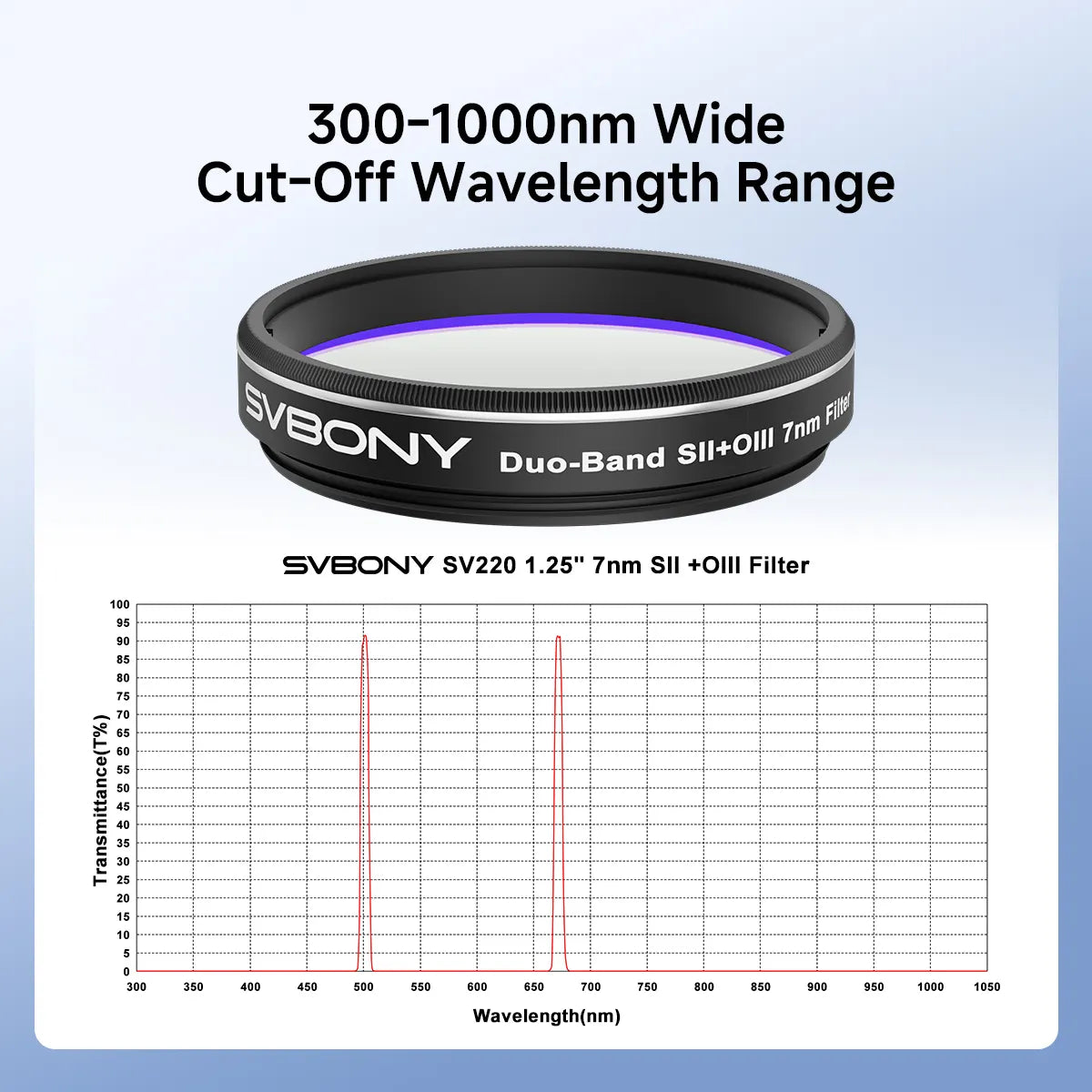
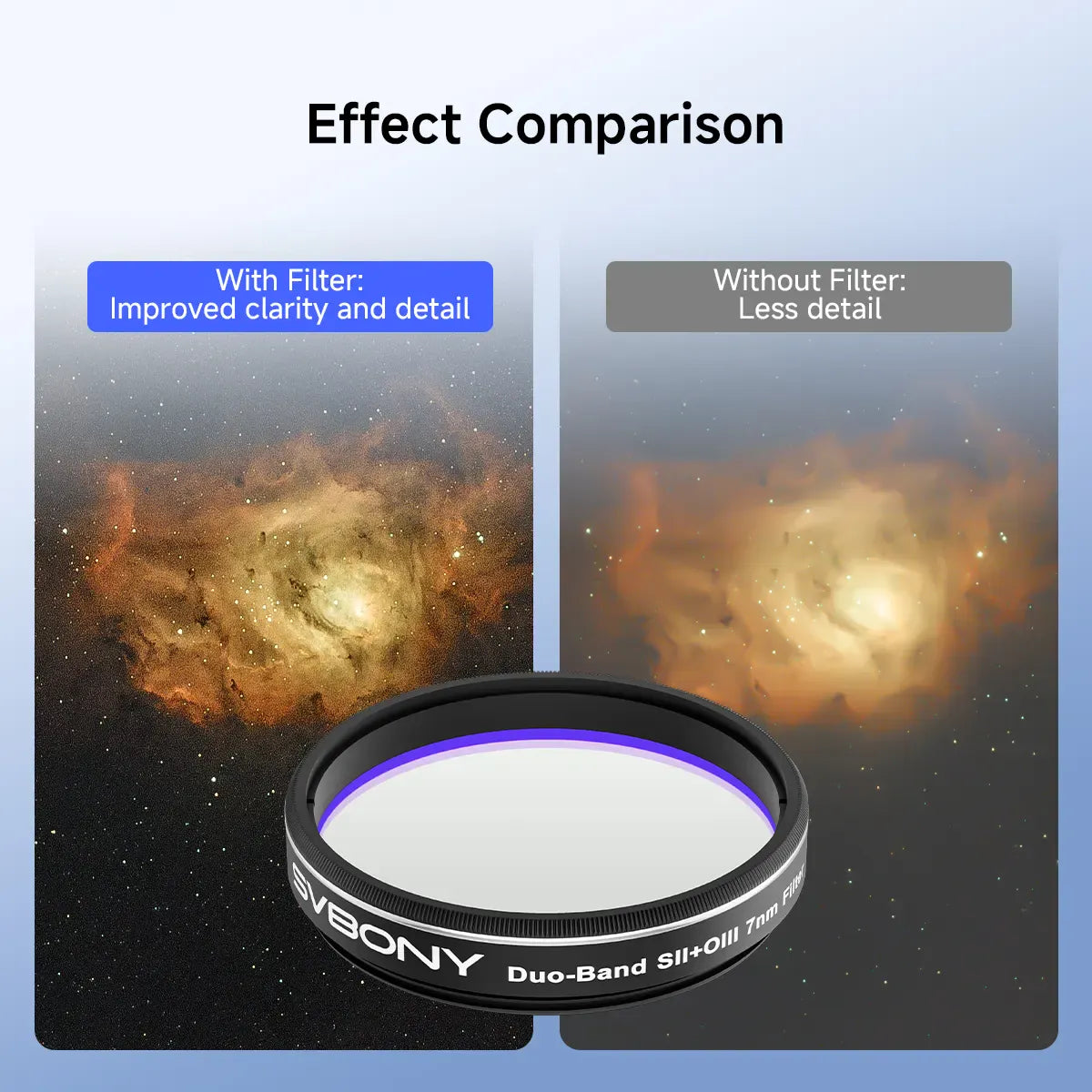
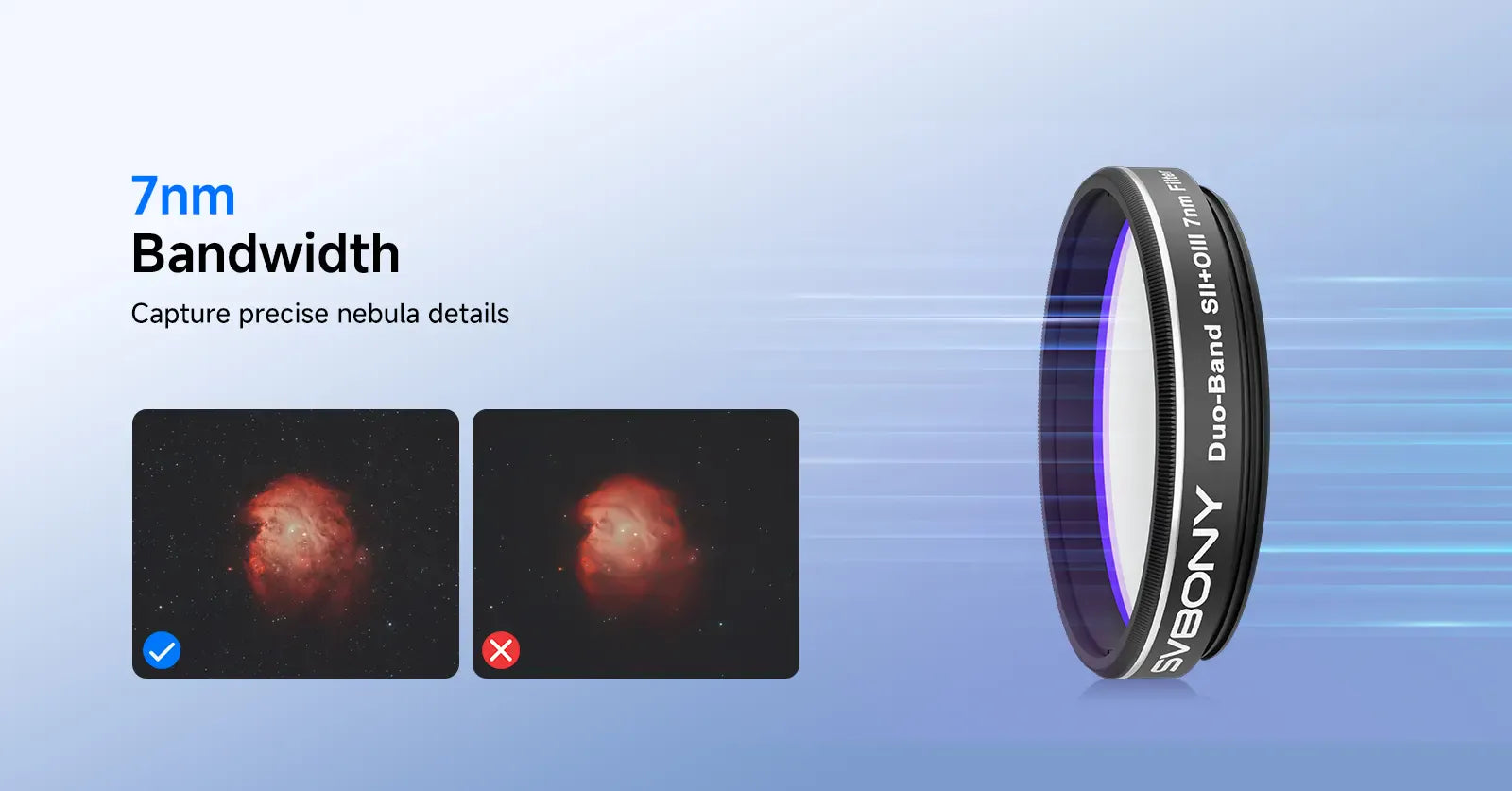
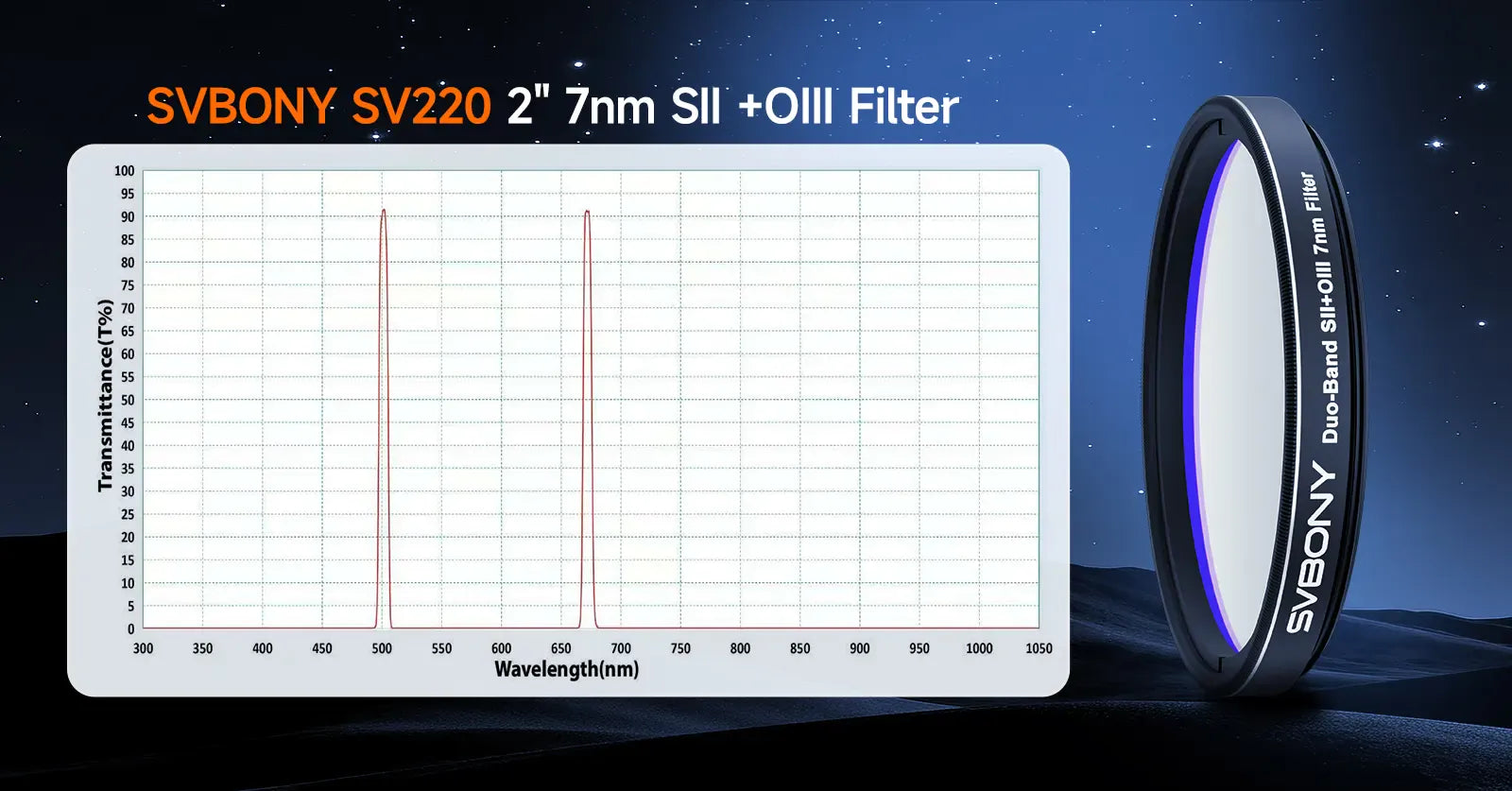
The SVBONY SV220 SII & OIII 7nm Duo-Band Filter is designed for One-Shot Colour (OSC) astrophotographers who want to capture high-contrast narrowband images without using multiple filters or a monochrome camera. This filter isolates the SII (672 nm) and OIII (500.7 nm) emission lines with a tight 7 nm bandwidth, enhancing contrast, suppressing light pollution, and darkening the sky background.
When paired with the SV220 H-Alpha & OIII Duo-Band Filter, this filter enables OSC users to achieve the SHO (Hubble Palette) colour balance that traditionally requires a mono camera setup.
Key Features
- 7 nm narrowband transmission windows for both SII and OIII
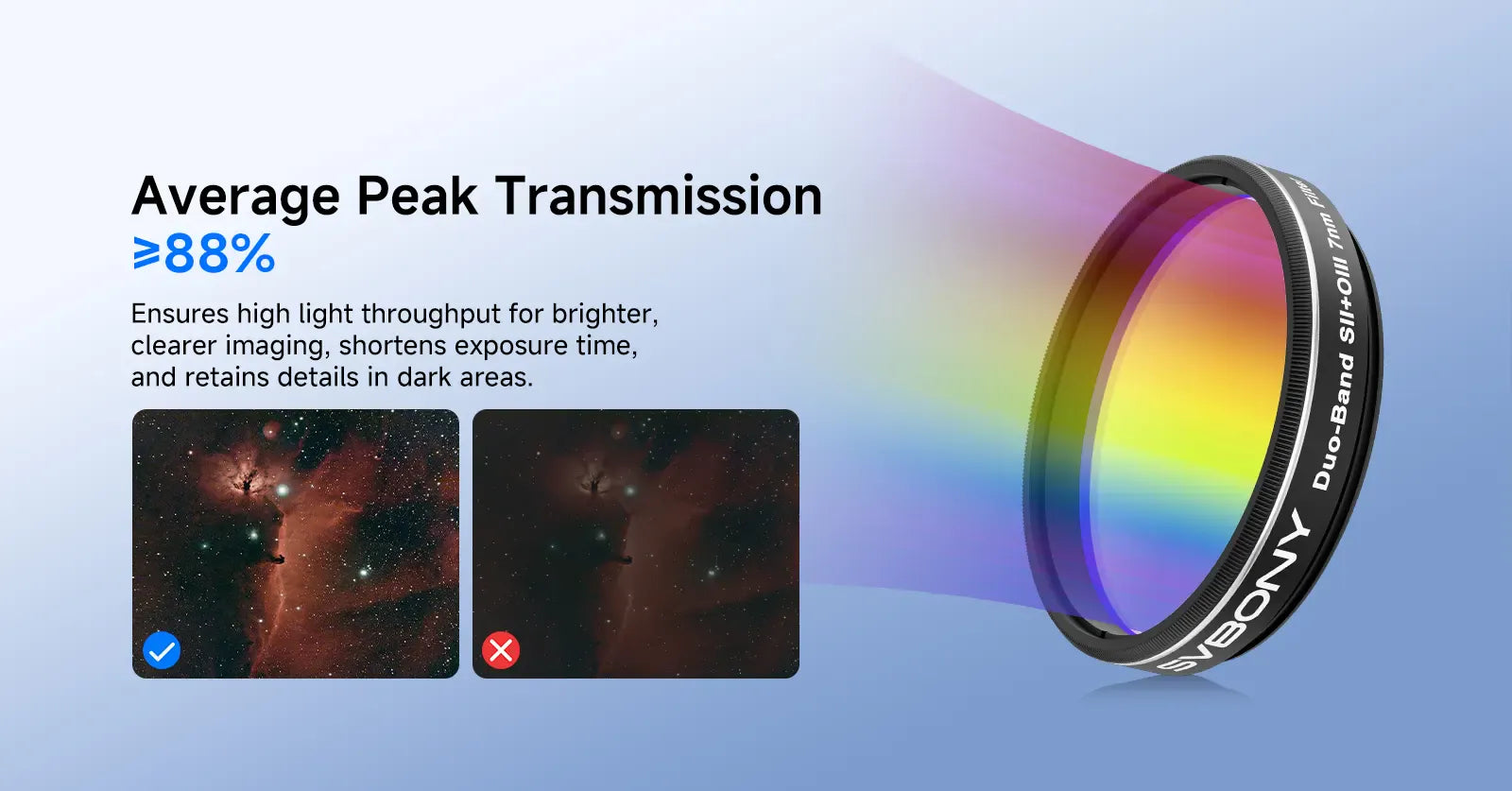
- Peak transmission of ≥88% at 500.7 nm (OIII) and 672 nm (SII)
- Ideal for One-Shot Colour cameras (ZWO, QHY, Player One, SVBONY)
- Excellent for imaging emission nebulae, planetary nebulae, and supernova remnants
- Recommended for telescope systems f/4 and slower
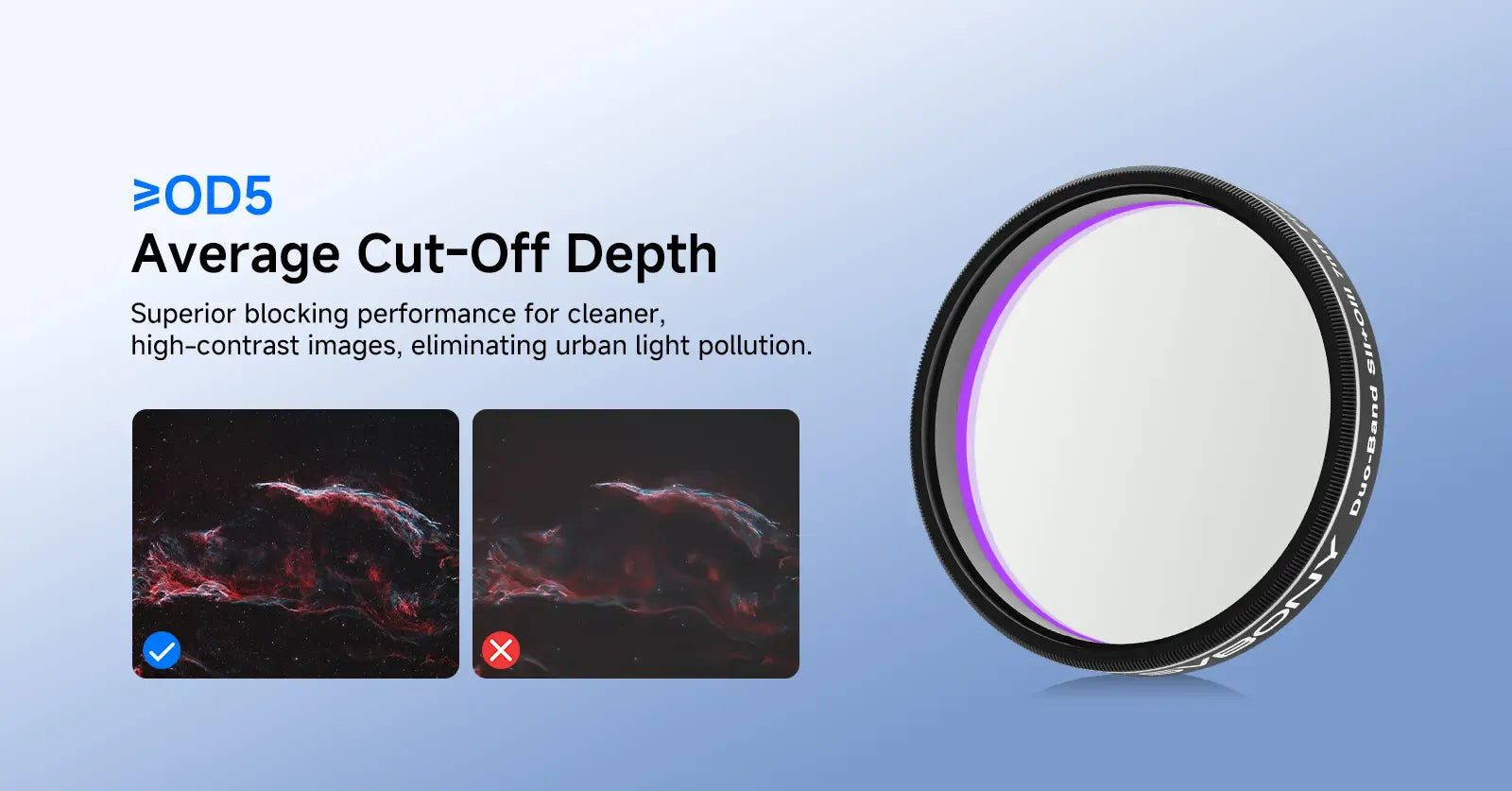
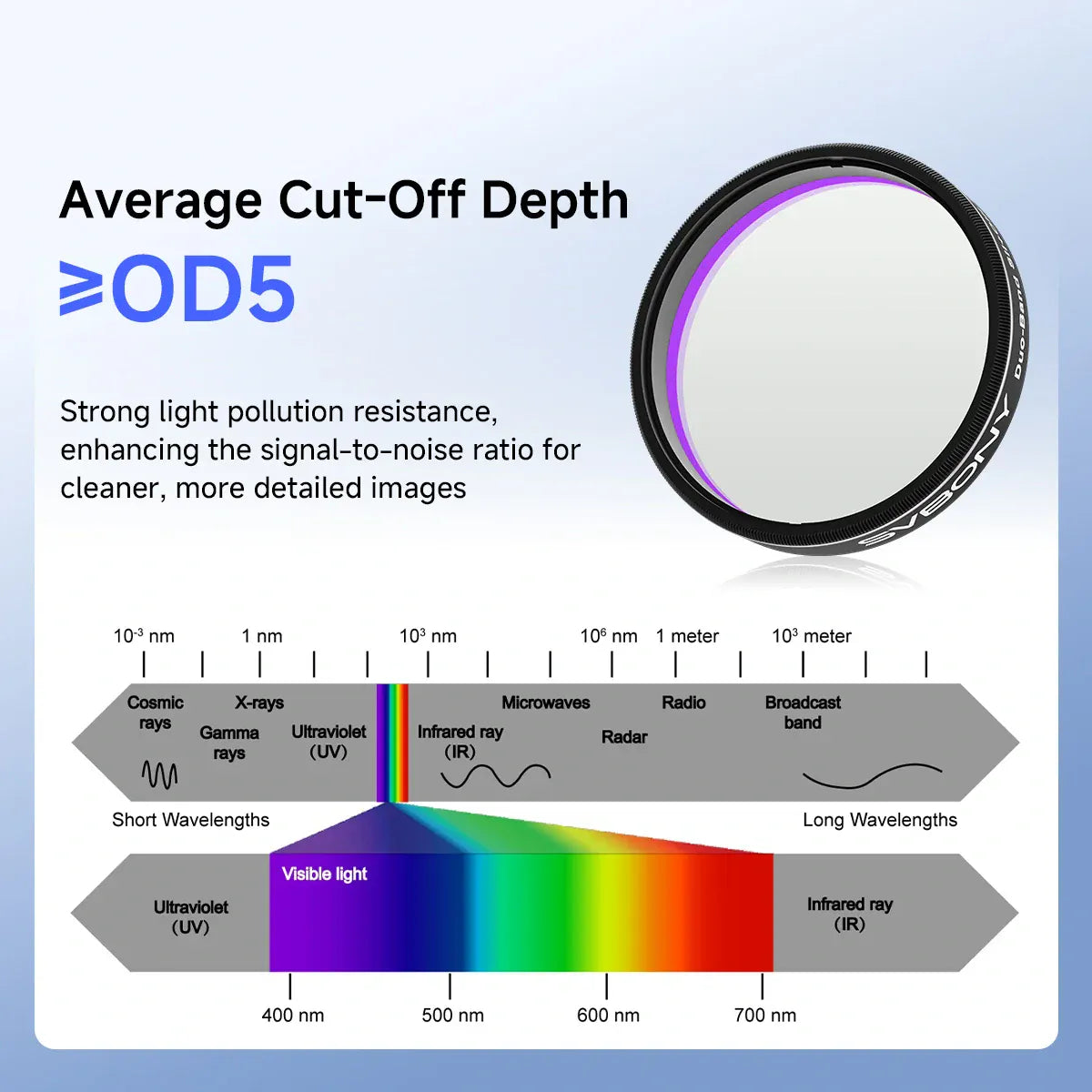
- Reduces light pollution and enhances image contrast
- Enables OSC users to achieve SHO narrowband colour mapping
Technical Specifications
Common Specifications (Both Sizes)
| Model | SV220 |
| Name | SII & OIII Duo-Band OSC Filter |
| Wavelength Range | 300–1000 nm |
| Bandwidth (FWHM) | 7 nm |
| Blocking | ≥ OD5 |
| Peak Transmission | ≥ 88% |
| Surface Quality | 60/40 |
| Surface Parallelism | 1/2 λ |
| Thread | Single-threaded |
1.25" Version
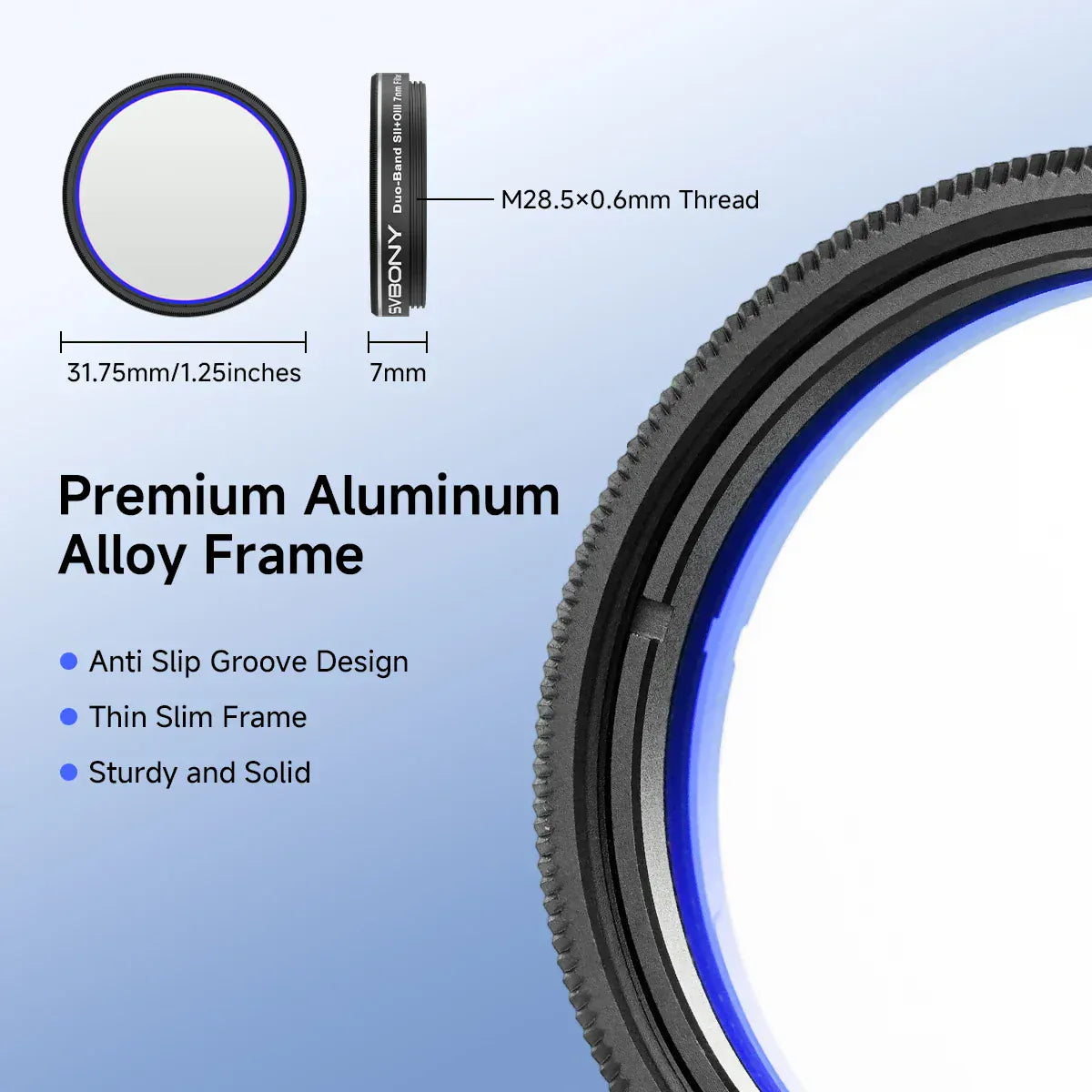
| Size | 1.25" |
| Substrate Thickness | 1.80 mm |
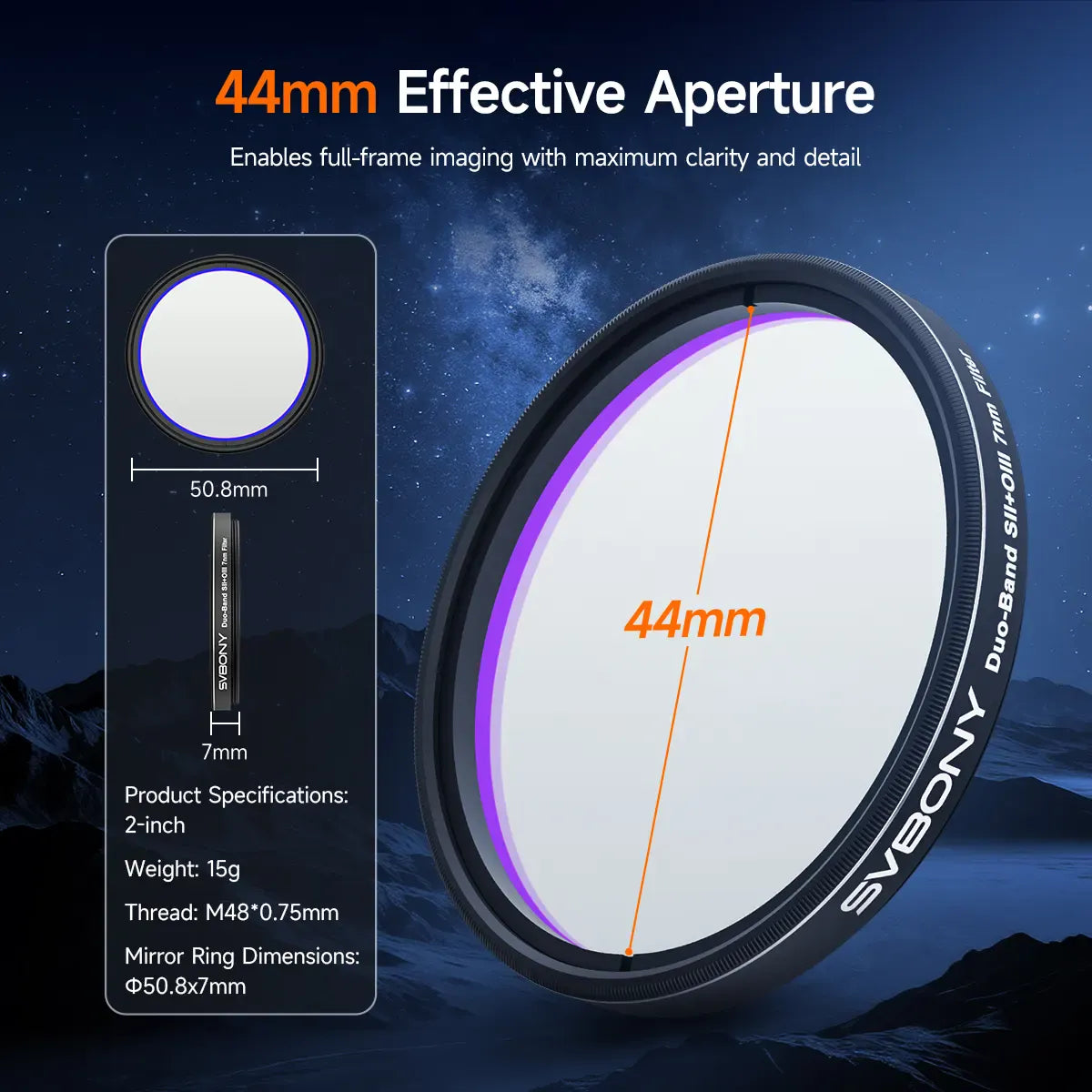
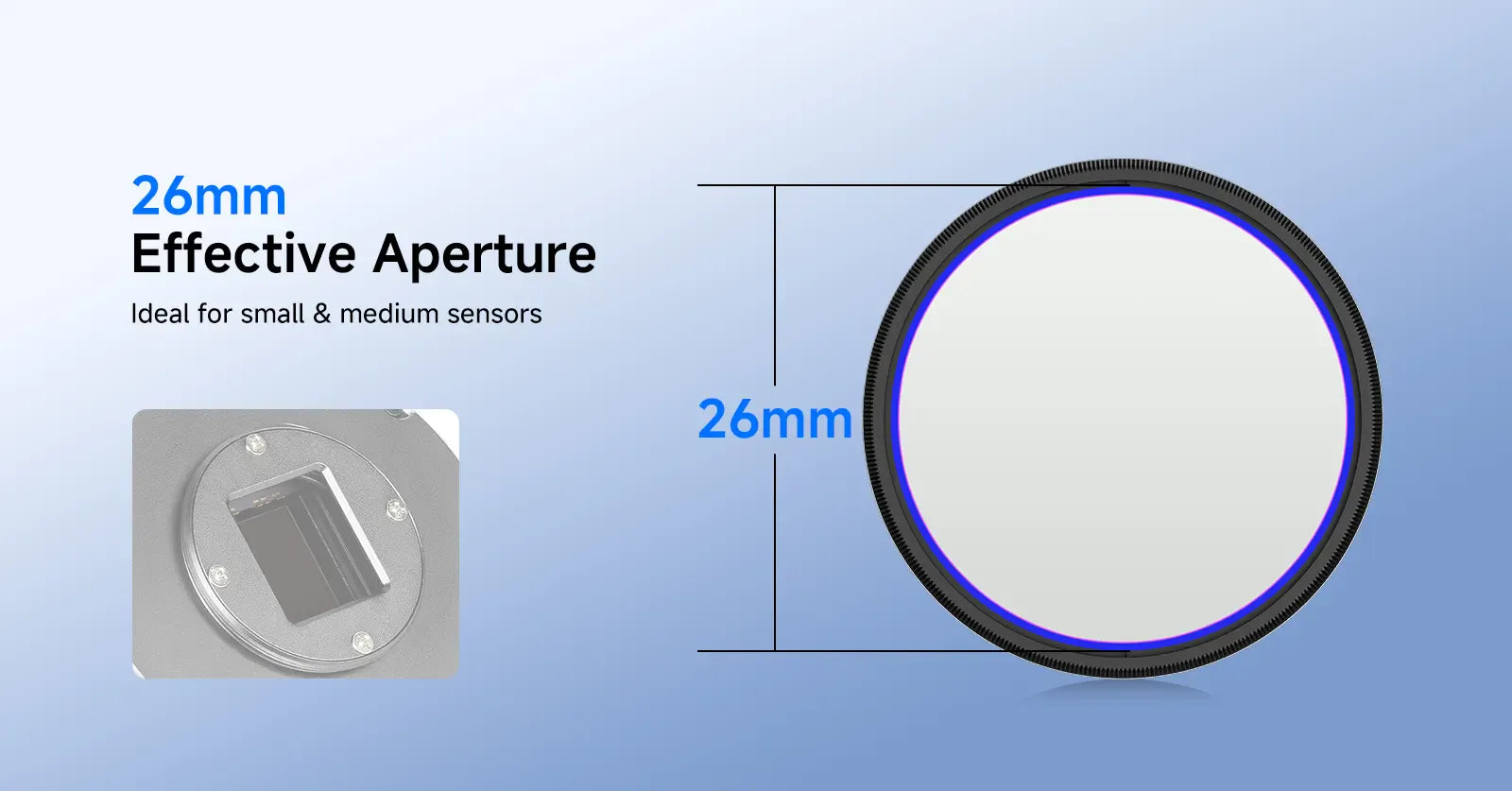
| Clear Aperture | 26 mm |
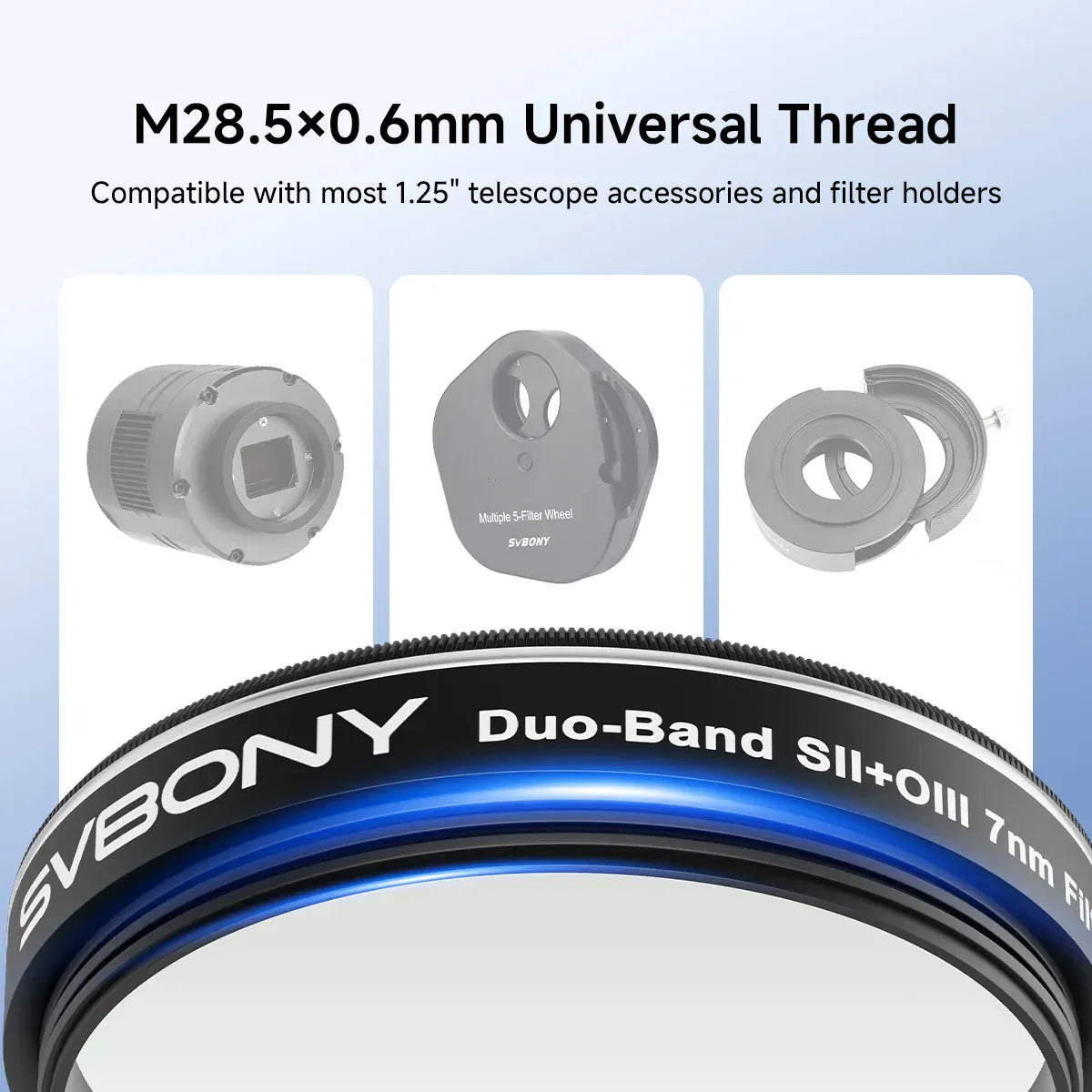
| Thread | M28.5 × 0.6 |
| Net Weight | 7 g |
2" Version
| Size | 2" |
| Substrate Thickness | 1.85 mm |
| Clear Aperture | 44 mm |
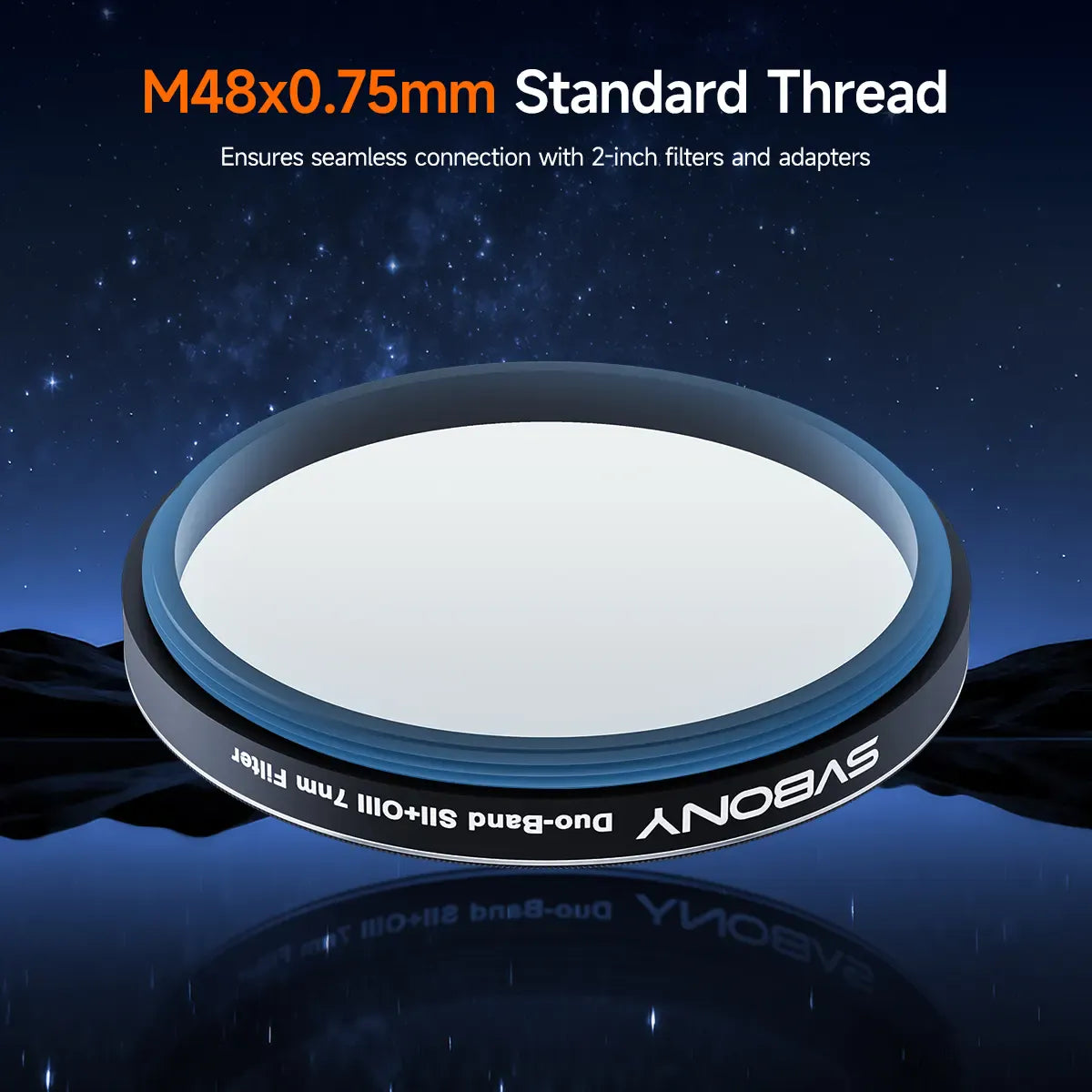
| Thread | M48 × 0.75 |
| Net Weight | 15–20 g |
Ideal For
- OSC cameras for narrowband imaging
- Light-polluted locations requiring selective wavelength filtering
- Capturing nebulae with strong SII & OIII emission
- Achieving SHO (Hubble Palette) with the SV220 filter pair
- Deep-sky imaging setups wanting improved contrast and detail
Note: The 1.25" and 2" options share the same optical performance — only the size, clear aperture, and threading differ.
Additional Resources