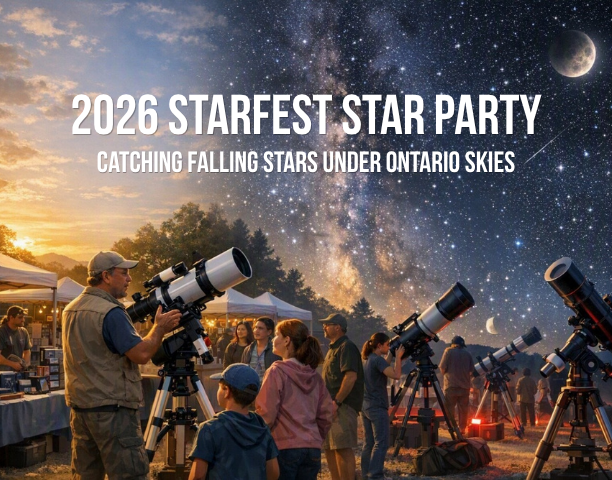
2026 Starfest Star Party: Catching Falling Stars Under Ontario Skies
Organized by the North York Astronomical Association, Starfest has been running since 1982 and is widely recognized as Canada’s largest star party. The event combines the atmosphere of a camping weekend with the structure of an astronomy conference, offering talks, workshops, vendor displays, observing sessions, children’s activities, and opportunities for beginners and experienced observers alike.

What’s in the Sky - April 2026
Explore the night sky this April with one of the most exciting months for stargazing in 2026. From a breathtaking total solar eclipse to the Lyrid meteor shower and stunning planetary alignments with the Moon, this guide highlights the must-see celestial events visible across Canada—along with expert tips and telescope recommendations to help you make the most of every clear night.

What's in the Sky - March 2026
March 2026 offers Canadian skywatchers a month filled with striking celestial events and rewarding telescope views. March also marks the approach of the spring equinox, bringing slightly longer evenings and improved opportunities for deep-sky observing as winter constellations like Orion begin to set and spring galaxies rise higher in the sky. With proper planning, warm clothing, and a stable telescope setup, this month provides ideal conditions for beginners and experienced observers alike. Whether you’re viewing the dramatic color of a Blood Moon, tracking bright planets at sunset, or scanning star clusters under crisp Canadian skies, March 2026 is a month that reminds us why we look up — and why a good telescope makes all the difference.
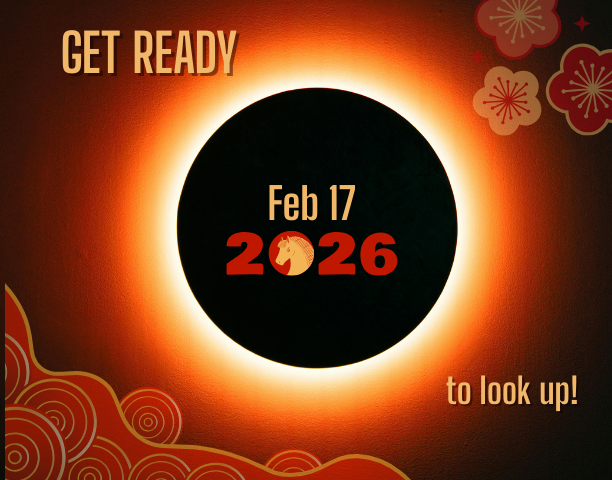
The 2026 “Ring of Fire” Eclipse: A Beginner’s Guide to One of the Sky’s Most Incredible Events
In 2026, skywatchers will have the chance to witness a breathtaking celestial event known as the “Ring of Fire” eclipse. This rare annular solar eclipse occurs when the Moon passes in front of the Sun but doesn’t fully cover it, leaving a glowing ring of sunlight in the sky. Beginner-friendly and visually stunning, this eclipse is a perfect opportunity to experience astronomy safely with the right telescope or binoculars—and a reminder that some of the most incredible moments happen when we simply look up.

Stargazing Date Night Ideas (Canadian Version)
Plan the perfect Valentine’s stargazing date night in Canada. Discover beginner-friendly telescopes for couples and enjoy the night sky together.
What's in the Sky February 2026
February brings some of winter’s best stargazing, with the Full Snow Moon lighting up the early part of the month and darker skies around the New Moon perfect for deep-sky exploring. Bright Jupiter, the reddish glow of Mars, and a beautiful Venus–Saturn pairing at dusk make this a rewarding month for planetary observing, while classic winter constellations like Orion and Taurus dominate the night sky. Bundle up, grab your binoculars or telescope, and enjoy the beauty of February’s crisp, star-filled nights.

Rhythms & Stars: A Celebration of Women & Girls in Science
This intergenerational community event marks the International Day of Women and Girls in Science and brings together youth, women, Elders, artists, educators, and community members to explore the intersection of astronomy, Indigenous knowledge, music, storytelling, and community connection.
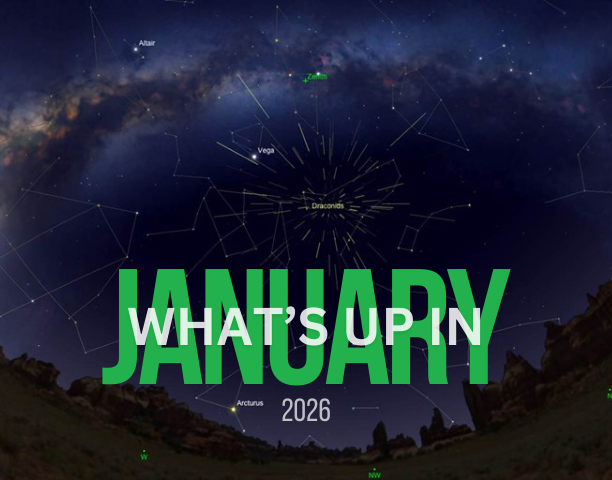
What's in the Sky January 2026
January opens 2026 with breathtaking celestial events, from a brilliant Wolf Supermoon and the fast-moving Quadrantid meteor shower to Jupiter shining at opposition in the winter sky. With long, dark nights and iconic constellations like Orion and Gemini on full display, January is the perfect month for stargazers to bundle up, set up their telescopes, and explore the beauty of the night sky.
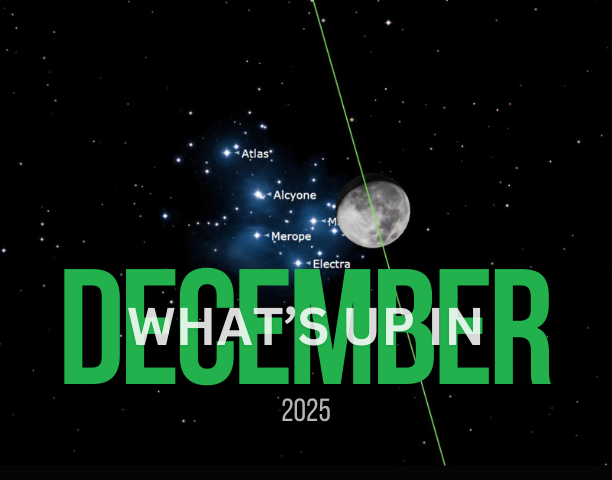
What's in the Sky December 2025
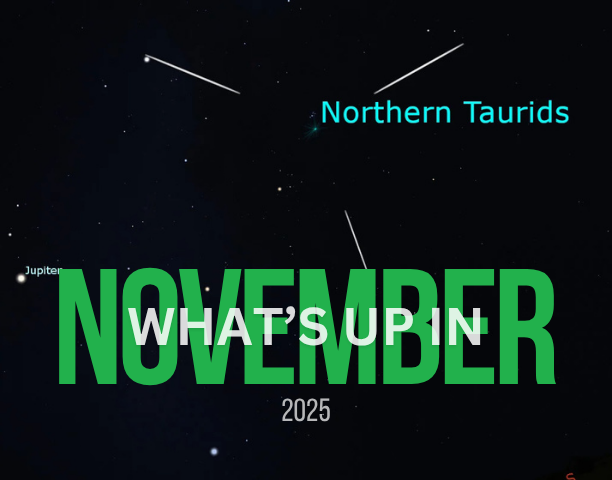
What's in the Sky November 2025
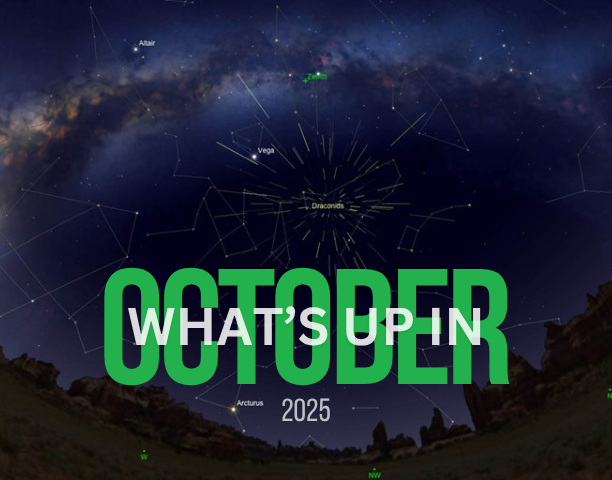
What's in the Sky October 2025